An AI performance decline when real-world data changes can occur even when a system performed impressively during testing and nothing in its original code has broken. Months after deployment, the model may become noticeably less accurate simply because the world around it no longer resembles the data on which it learned.
Machine-learning systems depend heavily on patterns found in historical information. When customer behavior, economic conditions, language, technology, fraud tactics, sensors, or business processes change, those patterns can weaken or disappear. Maintaining useful AI therefore involves more than building a strong model once. It requires continually assessing whether the real-world environment that gave the model its predictive power still exists.
Machine Learning Learns From Past Patterns
Traditional software often follows explicitly programmed rules. Machine-learning models work differently.
They learn statistical relationships from examples.
A fraud-detection system might learn that certain combinations of transaction amount, location, device characteristics, and purchasing behavior are associated with fraud.
A demand-forecasting model identifies relationships between historical sales and variables such as season, price, promotions, or economic conditions.
These relationships allow the model to make predictions about new observations.
The process depends on an important assumption: future data will resemble the information used during development closely enough for learned patterns to remain useful.
Real-world environments do not guarantee that stability.
When the relationship between historical examples and current reality weakens, prediction quality can deteriorate.
Data Drift Changes What the Model Sees
One common problem is data drift, sometimes called covariate shift.
This occurs when the distribution of input data changes.
Imagine a financial model developed largely from customers aged 30 to 55. If the company’s customer base later shifts substantially toward younger consumers, the model begins receiving a different mix of inputs.
Individual variables can change too.
Average transaction amounts may rise. Customers may increasingly use smartphones instead of desktop computers. Geographic demand may shift between regions.
None of these changes automatically makes the model useless.
The concern is whether the new inputs move far enough away from the training distribution that predictions become less dependable.
A model is generally strongest in situations resembling those it has already encountered.
Why AI Performance Declines When Real-World Relationships Change
Sometimes the inputs change while the underlying relationships remain fairly stable.
A more difficult problem occurs when the relationship between inputs and outcomes itself changes.
This is often called concept drift.
Suppose an ecommerce model predicts whether a shopper will purchase based partly on browsing behavior. Historically, customers who visited a product page repeatedly may have been particularly likely to buy.
Consumer habits later change.
People begin using comparison tools or AI shopping assistants that cause repeated visits for entirely different reasons. The old behavior no longer predicts purchase as strongly.
The model can receive familiar-looking data while its interpretation of that data has become outdated.
Concept drift is particularly challenging because simply checking whether input values have changed may not reveal the problem.
Customer Behavior Rarely Remains Static
Models used in commercial settings face constantly evolving human behavior.
Customers discover products through new channels. Payment preferences change. New competitors enter markets.
Economic pressures can alter spending patterns.
A recommendation model developed during a period of strong discretionary spending may behave differently when consumers become highly price-sensitive.
Changes can happen gradually or suddenly.
Gradual shifts give organizations more time to observe deterioration. Abrupt events can make historical patterns obsolete almost immediately.
The important point is that human behavior is not generated by a fixed mathematical process.
People react to prices, trends, technology, other people, and the AI systems themselves. Any model built around human decisions therefore operates in a moving environment.
Major Events Can Break Historical Patterns
Unusual events create some of the clearest examples of model deterioration.
Pandemics, wars, natural disasters, regulatory changes, financial crises, and supply disruptions can rapidly alter behavior.
Historical travel demand becomes less informative when borders close.
Normal purchasing patterns become unreliable when consumers suddenly stockpile certain products.
Credit behavior can change during severe economic disruption.
Models do not understand that an extraordinary event has occurred unless their inputs, architecture, or surrounding systems provide a way to account for it.
They continue applying relationships learned from earlier data.
This exposes one of the limitations of purely historical prediction: unprecedented conditions have little or no direct precedent from which to learn.
Fraud Models Face Intelligent Opponents

Fraud detection creates an especially difficult environment because the data changes partly in response to the model itself.
Fraudsters adapt.
Once a particular technique becomes easy to detect, attackers develop alternatives. They change transaction amounts, account behavior, devices, timing, or social-engineering strategies.
The model is effectively competing against an opponent.
Cybersecurity systems face similar challenges.
Attackers deliberately search for weaknesses and modify tactics when defenses improve.
This makes drift inevitable.
A highly accurate fraud model today cannot be assumed to maintain the same effectiveness indefinitely. Detection systems need current examples of emerging behavior and mechanisms for identifying patterns that differ from known attacks.
Language Changes Continuously
Language models and text-classification systems face their own form of changing data.
People invent slang. Product names appear. Political and cultural references evolve. New technologies introduce terminology that did not exist in older training sets.
The meaning of familiar terms can shift as well.
A customer-service classifier trained on historical messages may struggle when users begin describing a new product feature or problem using vocabulary absent from the original data.
Language differences can also emerge when a company expands geographically.
A model trained primarily on one region’s vocabulary, spelling, or communication style may perform differently when deployed elsewhere.
Text may look superficially similar while containing linguistic patterns the system has rarely encountered.
Sensors Can Change Without the Environment Changing
Not every distribution shift reflects genuine changes in the phenomenon being measured.
Sometimes the measurement process changes.
A factory might replace a temperature sensor with a newer model. The new device could have different calibration, precision, sampling frequency, or noise characteristics.
The machinery itself may be operating exactly as before.
The AI system nevertheless receives different numbers.
Medical and scientific applications face similar issues when equipment, laboratory procedures, imaging systems, or measurement standards change.
Even moving a sensor to another physical position can alter the data distribution.
This is why model monitoring must consider data pipelines and measurement systems, not just the behavior of the final algorithm.
Data Pipelines Can Introduce Silent Changes
Production AI depends on infrastructure that transforms raw information into model inputs.
That pipeline can change.
A software update might alter how a field is calculated. A database migration can introduce different missing-value behavior.
An upstream team may redefine a business metric without realizing that a model depends on the old definition.
The system may continue running normally.
Predictions still appear, so there is no obvious technical failure.
Yet the meaning of one or more features has changed.
These silent pipeline problems can be particularly dangerous because they resemble natural data drift while actually resulting from engineering or governance changes.
Strong production systems therefore monitor not only model outputs but also the integrity and meaning of the data entering them.
Missing Data Can Change Prediction Quality
Models learn patterns involving both values and their availability.
Suppose a healthcare model normally receives information from several clinical tests. A new workflow causes one measurement to become unavailable for many patients.
The model now operates with a different information environment.
How it responds depends on its design and the way missing values are handled.
Commercial systems experience similar problems when tracking systems fail, customers decline optional information, privacy policies change, or third-party data sources disappear.
A model that once relied heavily on a useful feature may become substantially weaker when that feature is no longer consistently available.
This deterioration can occur even though the algorithm itself remains unchanged.
Feedback Loops Can Change the Data a Model Receives
Once deployed, AI can influence the environment it predicts.
Consider a recommendation system.
It selects products for users. Customers are more likely to interact with products they actually see.
Those interactions become future training data.
The system has therefore influenced the information that will later be used to evaluate or retrain it.
Credit, hiring, advertising, content moderation, and predictive policing systems can face related feedback effects.
This creates a difficult analytical problem.
Observed outcomes may partly reflect previous model decisions rather than an independent picture of reality.
Without careful design, the system can reinforce existing patterns and become less capable of discovering alternatives.
Models Can Become Overconfident Outside Familiar Conditions
A model can produce a prediction even when the current situation is very different from its training experience.
The output may look perfectly normal.
A classifier might report a high probability, giving users the impression that the system is confident and therefore reliable.
Confidence and correctness are not the same thing.
Many models are capable of making confident predictions on unfamiliar or out-of-distribution inputs.
This is why production systems sometimes need mechanisms for recognizing uncertainty or unusual data.
When an observation is far outside normal operating conditions, referring it for human review can be more appropriate than forcing the model to make an ordinary automated decision.
Accuracy Can Hide Problems in Subgroups
Overall performance metrics can remain stable while the model deteriorates for particular groups.
Suppose accuracy remains at 92 percent across all customers.
That sounds reassuring.
But performance might have fallen substantially in one region while improving elsewhere.
A single average conceals the change.
Monitoring therefore often needs segmentation.
Organizations can examine performance by geography, product type, customer group, device, transaction category, or other relevant dimensions.
The appropriate breakdown depends on the application and must respect privacy, fairness, and legal requirements.
Subgroup analysis becomes particularly important when the composition of the real-world population changes after deployment.
Labels Often Arrive Later Than Predictions
Detecting model decline is easier when the correct answer becomes available immediately.
Many real applications do not work that way.
A credit-risk model may make a prediction today, but the organization cannot know whether a borrower eventually defaults until months later.
Medical outcomes can also take time to become clear.
Fraud may remain undiscovered for weeks.
This creates delayed feedback.
Organizations can monitor input distributions immediately, but confirming whether accuracy has actually declined may require waiting for labels.
Proxy metrics can provide early warning, though they need careful interpretation.
A change in inputs suggests possible risk. It does not prove that prediction quality has deteriorated.
Not Every Data Change Is Harmful
Drift is not automatically a problem.
An input distribution can change without affecting the relationships the model needs.
Imagine an online retailer’s average order value rises because all prices increased by a predictable amount, while the underlying factors determining customer purchasing behavior remain stable.
The model may continue performing adequately.
Conversely, a small change in one highly influential variable can produce significant deterioration.
Monitoring systems therefore need more than alarms whenever statistics move.
Teams must determine whether the shift is operationally meaningful.
Otherwise, constant false alerts can create monitoring fatigue and cause genuine problems to receive less attention.
Model Performance Needs a Production Baseline
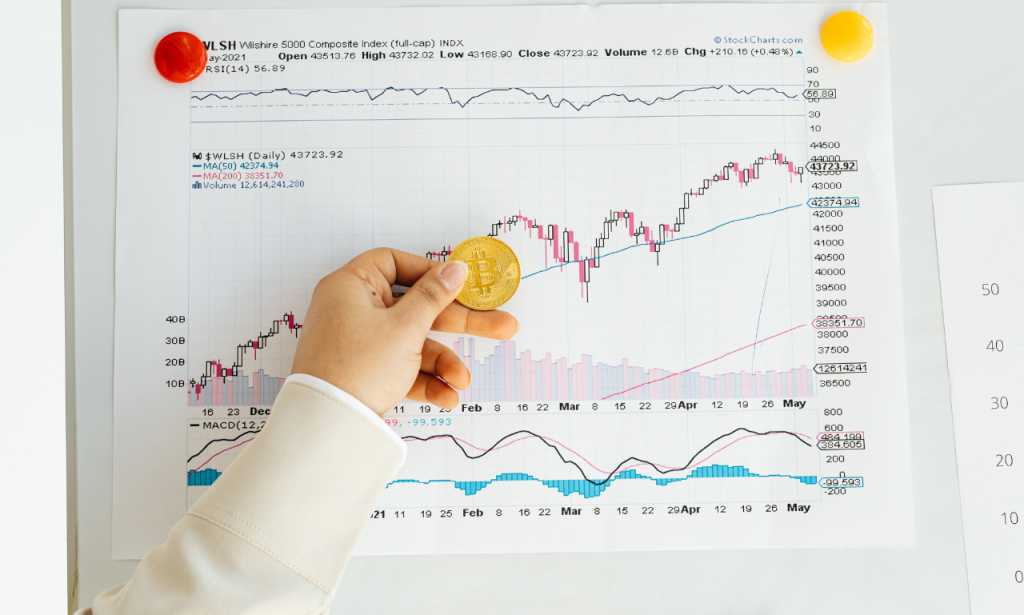
Organizations need something against which current behavior can be compared.
Training and validation performance provide useful starting points, but production conditions may differ from laboratory testing from the beginning.
A production baseline can include input distributions, prediction patterns, latency, error rates, calibration, and eventual outcome metrics.
Once normal behavior is established, deviations become easier to detect.
The baseline itself may need updating as legitimate business conditions evolve.
Monitoring is therefore not about preserving the world exactly as it looked when the model launched.
It is about identifying changes that threaten the model’s ability to perform its intended function.
Retraining Can Restore Relevance
When meaningful drift occurs, retraining the model on more recent data can improve performance.
New examples expose the system to current patterns.
Retraining, however, is not simply a matter of pressing a button.
Recent data needs to be representative and sufficiently accurate. Labels may contain errors.
A temporary event can also distort the dataset.
If a model is retrained entirely around unusual short-term conditions, it may become weaker when circumstances normalize.
Teams need to decide how much historical information to retain and how much emphasis to place on newer observations.
The correct balance depends on how quickly the underlying environment changes.
Retraining Too Frequently Has Costs
Constant retraining sounds attractive in fast-moving environments.
It creates risks of its own.
New models need evaluation before deployment. Changes can introduce regressions, fairness concerns, unstable predictions, or unexpected interactions with downstream systems.
Computational cost may also be significant.
In regulated or high-stakes settings, new versions may require extensive documentation and validation.
Organizations therefore need a retraining strategy tied to evidence rather than an assumption that newer is always better.
Some models may require frequent updates. Others remain effective for years because the relationships they capture are relatively stable.
Monitoring should determine the need.
Sometimes the Features Need to Change
A model can become outdated because the information it receives no longer captures the most important forces in the environment.
Retraining on the same features may provide limited improvement.
Suppose customer behavior increasingly depends on a new sales channel that did not exist when the system was designed.
The model may need information about that channel.
Fraud systems often face this problem when attackers invent entirely new strategies.
Historical features designed around old attacks may not describe the new behavior adequately.
Model maintenance can therefore require feature engineering, new data sources, or architectural changes—not merely updating parameters with newer examples.
Human Oversight Remains Important
Automated predictions are most reliable when organizations understand their limitations.
Human review can provide a safety mechanism when models encounter unusual situations, especially in high-stakes applications.
People can recognize contextual changes that historical models cannot immediately incorporate.
A sudden regulatory announcement, natural disaster, supply interruption, or new fraud campaign may be obvious to a domain expert before enough data exists for the model to learn its significance.
Human oversight does not eliminate model drift.
It provides another source of judgment while automated systems adapt.
The appropriate balance between automation and review depends on the cost of mistakes, prediction volume, and how quickly conditions change.
Documentation Helps Teams Understand Drift
AI systems can remain in production longer than the tenure of individual employees who created them.
Without documentation, later teams may not know which assumptions were built into the model.
Useful records can describe training periods, data sources, feature definitions, known limitations, evaluation methods, and expected operating conditions.
This information becomes valuable when performance changes.
Teams can ask whether a key assumption has stopped being true.
Documentation also helps distinguish model problems from pipeline or business-process changes.
Maintaining AI is easier when the organization remembers why the system worked in the first place.
Stable Models Still Need Monitoring
A model that has performed well for years can still encounter an abrupt change tomorrow.
Long periods of stability are reassuring but do not guarantee future stability.
Monitoring should therefore be treated as part of operating an AI system rather than as a temporary phase immediately after launch.
The level of monitoring should reflect risk.
A low-impact recommendation feature may tolerate some performance deterioration before intervention.
A system involved in safety, healthcare, finance, or critical infrastructure can require much tighter oversight.
The consequences of an incorrect prediction determine how much confidence organizations need before allowing a model to continue operating unchanged.
Conclusion
The world generates the data that gives machine learning its predictive value, and that world never remains perfectly still. Consumers adopt new habits, sensors are replaced, markets shift, attackers change tactics, and unusual events reshape patterns that once appeared dependable.
That moving environment explains why AI performance can decline as real-world data changes. A model may continue executing exactly as designed while the statistical relationships that made its predictions useful gradually disappear. In that sense, deterioration can be evidence of environmental change rather than conventional software failure.
Reliable AI therefore requires an operational mindset rather than a one-time development mindset. Monitoring inputs and outcomes, investigating meaningful drift, maintaining data pipelines, retraining when justified, and retaining human oversight allow systems to evolve alongside the conditions they are intended to understand. The best model is not merely the one that performed well when it was built, but the one whose usefulness continues to be tested against reality.
Also Read: Can AI Work Without Internet Access?
FAQs
Data drift occurs when the statistical distribution of the information entering a model changes from what it encountered previously.
Concept drift occurs when the relationship between input data and the outcome being predicted changes over time.
No. Some changes have little effect on prediction quality. Retraining should follow evidence that the shift meaningfully affects performance.
Monitoring systems can detect certain changes, but confirming deterioration often requires real outcome data, testing, and human analysis.
Leave a Reply