
Augmented reality has evolved far beyond simple digital overlays on smartphone screens. One of the most significant developments in recent years is persistent augmented reality, a technology that allows digital content to remain anchored in the real world over time. Instead of disappearing when an app closes, virtual objects can stay connected to specific locations and become part of a shared digital environment.
As augmented reality continues to mature, persistent experiences are becoming a key step toward more immersive and practical digital interactions. Understanding how this technology works helps explain why many experts see it as a foundation for the future of spatial computing.
What Is Persistent Augmented Reality?

Persistent augmented reality refers to AR experiences that remain fixed in a physical location even after a user leaves and returns later. Digital objects, information, or experiences maintain their position in the real world and can often be accessed by multiple users across different devices.
Traditional augmented reality usually creates temporary experiences. A virtual chair placed in a room through a mobile app disappears once the session ends. Persistent augmented reality changes that model by allowing the chair to remain in the same spot indefinitely.
Imagine leaving a virtual note on a wall in your office. Days later, you return and find it exactly where you placed it. A colleague using a compatible device can also see the same note. That ability to create lasting digital content within physical spaces defines persistent AR.
How Persistent Augmented Reality Works
Creating a persistent digital layer over the physical world requires several technologies working together.
The process begins with environmental mapping. Devices scan their surroundings and create detailed digital representations of physical spaces. Cameras, sensors, and depth scanners collect information about surfaces, objects, and room layouts.
Once the environment is mapped, digital content is attached to specific points known as spatial anchors. These anchors act like coordinates that tell the system where virtual objects belong.
Cloud infrastructure plays a critical role. Spatial data is stored and synchronized across devices, allowing users to access the same augmented reality experience from different locations and at different times.
As devices revisit mapped environments, they recognize previously scanned areas and accurately place digital content in its original position. This creates the illusion that virtual objects permanently exist within the physical world.
The Role of Spatial Anchors
Spatial anchors are among the most important components of persistent AR.
An anchor functions as a reference point within a real-world environment. When a virtual object is placed in a room, the system remembers its relationship to walls, furniture, and other physical features.
Modern cloud-based anchors can synchronize data across multiple devices. This means users can share experiences and interact with the same digital content regardless of where or when they access it.
Persistent AR vs Traditional Augmented Reality
Many people confuse persistent AR with standard augmented reality, but the differences are significant.
Traditional AR focuses on temporary interactions. The digital experience usually exists only during an active session. Once the application closes, the virtual content disappears.
Persistent AR introduces continuity. Digital objects remain available between sessions and often across devices.
This distinction transforms augmented reality from a short-term visual enhancement into a long-term digital layer connected to physical spaces.
The shift also enables collaborative experiences. Multiple users can interact with shared virtual content, making persistent AR far more useful for business, education, gaming, and communication.
The Role of AR Cloud and Spatial Anchors
Persistent augmented reality would not be practical without the AR Cloud.
The AR Cloud is often described as a digital copy of the physical world. It stores spatial information about locations and environments, allowing devices to understand where they are and what digital content belongs there.
Think of it as a global positioning system for augmented reality. Instead of tracking roads and destinations, it tracks physical spaces and virtual objects.
When users access a persistent AR experience, the AR Cloud helps devices retrieve relevant spatial data and position digital content accurately.
This technology allows experiences to persist not only across time but also across different users and hardware platforms.
Why the AR Cloud Matters
Without cloud-based spatial mapping, every AR session would need to start from scratch.
The AR Cloud creates a shared digital memory of physical spaces. This shared memory allows persistent experiences to scale beyond individual devices and become accessible to larger communities.
Many industry experts consider the AR Cloud a critical building block for the future spatial web.
Technologies That Power Persistent AR
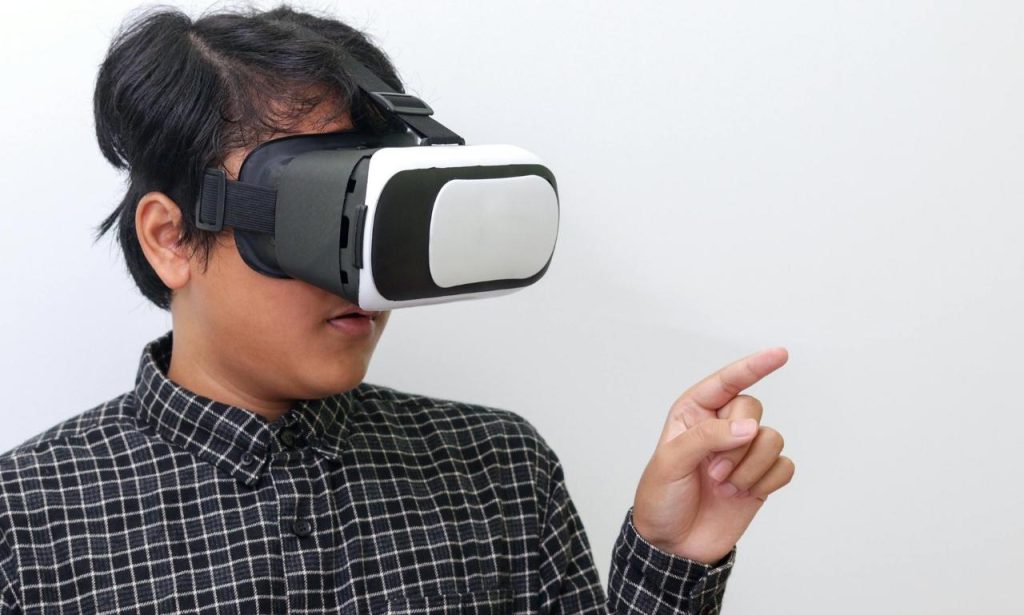
Persistent augmented reality depends on a combination of advanced technologies.
Computer vision enables devices to identify and understand physical environments. Cameras continuously analyze surroundings and detect landmarks that help maintain accurate positioning.
Simultaneous Localization and Mapping, commonly known as SLAM, allows devices to map environments while determining their own location within those spaces.
Machine learning improves environmental recognition and object tracking. As systems process more data, they become better at understanding complex environments.
LiDAR sensors add another layer of precision by measuring distances and generating detailed depth maps.
Cloud computing provides the storage and processing power required to manage large amounts of spatial information.
High-speed networks such as 5G support faster synchronization, helping maintain seamless experiences across connected devices.
Together, these technologies create the infrastructure needed for persistent digital experiences.
Real-World Applications of Persistent AR
Persistent augmented reality is already finding practical uses across many industries.
In retail, businesses can create permanent virtual showrooms that allow customers to visualize products within real environments. A customer could place a virtual sofa in their living room and revisit it later without repeating the setup process.
Education is another promising area. Schools and training centers can build interactive learning environments where digital content remains available for future students.
Manufacturing companies use persistent AR to display maintenance instructions directly on machinery. Workers can access the same information repeatedly, reducing training time and improving efficiency.
Healthcare organizations are exploring persistent AR for medical training and procedural guidance. Virtual annotations can remain attached to equipment and training environments.
Tourism and cultural institutions are also adopting the technology. Historical landmarks can feature permanent digital reconstructions that visitors access through AR devices.
Gaming remains one of the most visible applications. Location-based experiences become more immersive when virtual content persists and evolves over time.
Benefits of Persistent Augmented Reality
The value of persistent AR extends far beyond visual novelty.
One major benefit is continuity. Users no longer need to recreate digital experiences each time they open an application.
Collaboration improves significantly because multiple people can interact with the same virtual content. This creates opportunities for remote teamwork, shared learning, and collaborative design.
Persistent AR also increases context awareness. Digital information becomes tied to real locations, making it easier to deliver relevant content at the right moment.
Businesses can improve operational efficiency by providing workers with location-specific instructions and information.
Customer engagement often increases because experiences feel more immersive and meaningful when digital content maintains a lasting presence.
As devices become more capable, these benefits are expected to expand across both consumer and enterprise markets.
Challenges and Limitations of Persistent AR
Despite its potential, persistent augmented reality faces several challenges.
Privacy remains one of the biggest concerns. Mapping physical environments requires extensive data collection, which raises questions about ownership, consent, and surveillance.
Data storage is another challenge. Maintaining accurate spatial maps for millions of locations requires substantial infrastructure.
Technical limitations also exist. Environmental changes can affect tracking accuracy. Furniture moves, buildings change, and lighting conditions vary over time.
Device compatibility presents additional obstacles. Not all smartphones and AR headsets support advanced spatial mapping capabilities.
Security risks must also be addressed. Persistent digital content could become a target for unauthorized access or manipulation.
Addressing these challenges will be essential for widespread adoption.
Persistent AR and the Future of Spatial Computing
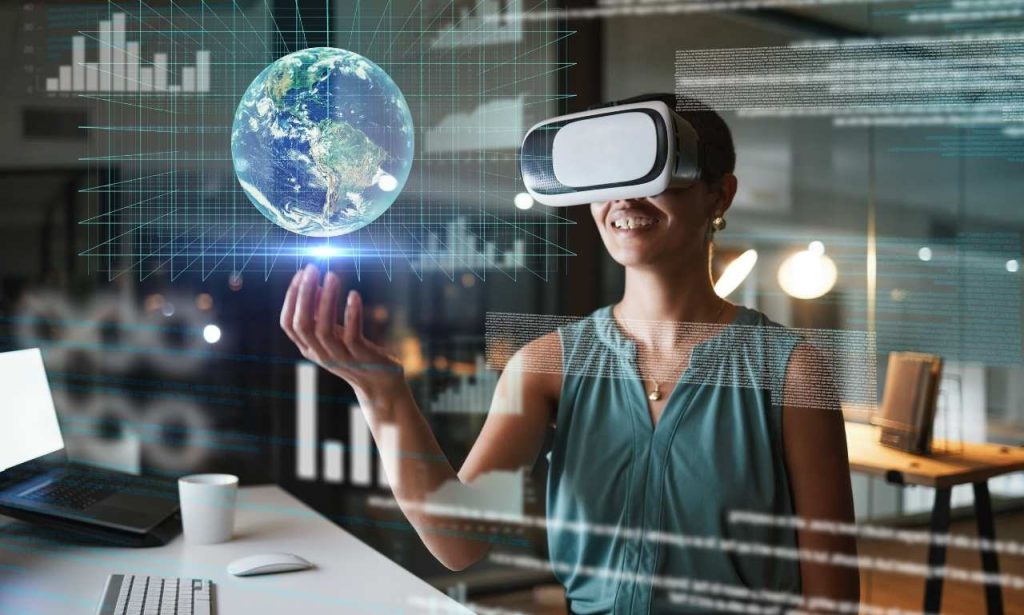
Persistent augmented reality is increasingly connected to the broader concept of spatial computing.
Spatial computing refers to technologies that allow digital systems to understand and interact with physical space. Persistent AR serves as one of the most practical examples of this concept in action.
As AR glasses become more advanced, users may eventually interact with digital information as naturally as they interact with physical objects.
Virtual workspaces, navigation systems, educational tools, and entertainment experiences could all become integrated into everyday environments.
Rather than opening separate applications, users may access digital content directly within the spaces around them.
This shift could fundamentally change how people work, communicate, learn, and consume information.
Persistent Augmented Reality Trends to Watch
Several trends are shaping the future of persistent AR.
Artificial intelligence is improving environmental understanding and object recognition. AI-driven systems can create more responsive and adaptive experiences.
Wearable AR devices continue to advance. Lighter and more powerful smart glasses could make persistent AR accessible throughout the day.
Digital twins are becoming increasingly important. These virtual representations of physical environments can support planning, monitoring, and collaboration.
Cross-platform interoperability is also gaining attention. Industry standards may allow persistent experiences to function across different hardware ecosystems.
As these technologies mature, persistent AR will likely move from experimental projects to mainstream applications.
Conclusion
Understanding what persistent augmented reality is requires looking beyond simple digital overlays. Persistent AR introduces continuity, shared experiences, and long-term digital interactions within physical spaces. By combining spatial mapping, cloud infrastructure, computer vision, and advanced sensors, it creates digital content that remains connected to the real world.
While technical and privacy challenges remain, the technology is already transforming industries ranging from retail and education to healthcare and manufacturing. As spatial computing continues to evolve, persistent augmented reality is positioned to become one of the defining technologies shaping how people interact with digital information in everyday life.
Also Read: How Do Virtual Reality Haptics Work?
FAQs
Persistent augmented reality allows digital objects and information to remain attached to real-world locations even after users leave and return later.
Traditional AR experiences are usually temporary, while persistent AR keeps digital content anchored in place across multiple sessions and devices.
The AR Cloud is a digital spatial layer that stores information about physical environments and helps devices accurately place persistent virtual content.
Persistent AR is used in retail, education, healthcare, manufacturing, tourism, real estate, and gaming, among other sectors.
Leave a Reply