
Anyone who has spent time inside a modern VR headset eventually encounters the same moment. The visuals are convincing. The sound feels directional and real. Then a virtual object appears within reach, and instinct takes over. You try to touch it.
That simple reaction reveals one of virtual reality’s biggest challenges. Human beings don’t experience the world through sight and sound alone. We rely on touch to confirm what is real. Virtual reality haptics exist to bridge that gap, giving digital experiences a physical dimension that makes them feel far more believable.
The Missing Sense in Virtual Reality

For decades, developers focused on improving what users could see and hear. Display resolutions increased, tracking systems became more accurate, and audio technologies grew increasingly sophisticated. Yet something still felt incomplete.
Imagine standing on the edge of a virtual cliff. The view may look breathtaking, but your brain knows something is missing. There is no sensation beneath your feet. No feeling of wind against your skin. No physical confirmation that the environment around you exists.
Touch plays a surprisingly important role in how people interpret reality. Even simple actions such as pressing a button, opening a door, or picking up a coffee mug generate countless sensory signals. Without those signals, virtual environments can feel impressive but strangely hollow.
This is where haptic technology changes the experience. By introducing physical sensations into digital interactions, it gives users something their brains naturally expect.
Why Seeing an Object Is Not the Same as Feeling It
The human brain rarely relies on a single sense when processing information. Instead, it combines sight, sound, touch, balance, and movement to create a complete picture of the world.
Consider a virtual tennis racket. A player may see it clearly inside a headset. Motion tracking may accurately mirror every swing. Yet if there is no sensation when the racket strikes the ball, the interaction feels incomplete.
That missing feedback affects more than realism. It influences reaction time, spatial awareness, and even memory formation. Researchers have consistently found that physical interaction strengthens engagement and improves learning outcomes.
This explains why touch has become such a major focus within virtual reality development. The goal is not merely to make VR more entertaining. It is to make digital experiences feel more natural and intuitive.
How Do Virtual Reality Haptics Work?
At its core, the answer is surprisingly straightforward. Virtual reality haptics work by converting digital events into physical sensations that the body can perceive.
Every interaction inside a virtual environment generates data. When a user grabs an object, presses a trigger, pulls a lever, or collides with a surface, the software recognizes that event instantly.
The system then sends instructions to haptic hardware. These instructions tell the device what type of sensation to create, how strong it should feel, where it should occur, and how long it should last.
The user experiences the result as vibration, pressure, resistance, impact, or movement.
The process happens so quickly that most people never notice the individual steps involved. They simply feel a response that appears connected to their actions inside the virtual world.
What makes the illusion effective is timing. The moment the visual event occurs, the physical sensation must follow almost immediately. Even a slight delay can make the experience feel unnatural.
The Journey From Virtual Action to Physical Feedback

Behind every haptic sensation lies a sequence of events occurring in fractions of a second.
First, tracking systems determine the user’s position and movement. Sensors embedded in controllers, gloves, or body-worn devices continuously collect information about what the user is doing.
Next, the VR application interprets that information. If a virtual hand touches a wall, picks up an object, or receives an impact, the software identifies the interaction.
The system then calculates the appropriate response. Touching a soft pillow requires different feedback than striking a metal surface. Picking up a heavy crate should feel different from lifting a tennis ball.
Finally, actuators inside the haptic device produce the sensation. These tiny mechanical components create movement, vibration, force, or pressure that users can physically feel.
Although the process sounds technical, the objective remains simple. The technology attempts to convince the brain that a virtual event has a physical counterpart.
Why a Simple Vibration Can Fool the Brain
One of the most interesting aspects of haptic technology is how little stimulation is often required to create a convincing illusion.
Most consumer VR systems rely heavily on vibration motors. These devices cannot replicate every detail of touch, yet they remain surprisingly effective.
The reason lies in how the brain processes sensory information. Human perception is not a perfect recording system. Instead, the brain constantly fills gaps using context and expectation.
If users see a sword strike a shield and simultaneously feel a brief pulse in their hands, the brain often combines those signals into a single believable experience.
This principle allows relatively simple hardware to create sensations that feel more complex than they actually are. Developers frequently use carefully timed feedback to suggest weight, impact, recoil, or texture without reproducing those sensations perfectly.
In many cases, the illusion matters more than complete physical accuracy.
Beyond Controller Rumble: Modern Haptic Systems
The earliest VR haptics relied almost entirely on controller vibrations. Today’s systems have moved far beyond that approach.
Haptic gloves represent one of the most significant advances. These devices track finger movement and apply localized pressure to specific areas of the hand. As a result, users can feel resistance when interacting with virtual objects.
Haptic vests extend feedback across the torso. A user might feel an incoming projectile from a particular direction or experience environmental effects such as shockwaves and impacts.
More advanced systems use force feedback technology. Rather than simply vibrating, these devices actively resist movement. This allows users to experience sensations that resemble weight, tension, or physical constraints.
Researchers are also exploring ultrasonic haptics. Instead of relying on wearable devices, these systems use focused sound waves to create touch sensations in mid-air. The technology remains relatively new, but it offers a glimpse of what future virtual experiences may look like.
Can Virtual Reality Really Recreate Touch?
This question often receives exaggerated answers. Some marketing claims suggest virtual reality can fully reproduce physical sensation. The reality is more nuanced.
Modern haptic systems can simulate certain aspects of touch remarkably well. Impacts, vibrations, directional feedback, and resistance have improved dramatically over the past decade.
Replicating every detail of human touch, however, remains an enormous challenge.
Touch involves far more than pressure alone. The skin detects texture, temperature, moisture, elasticity, and countless subtle variations that change from moment to moment. Reproducing all of those signals simultaneously requires a level of precision that current consumer technology cannot yet achieve.
Even so, perfect realism may not be necessary. Many successful VR experiences rely on convincing approximations rather than exact duplication. If the brain accepts the illusion, the experience can still feel authentic.
Where Haptics Matter Most Beyond Gaming
Gaming receives most of the attention, but some of the most important applications exist elsewhere.
Medical training is a notable example. Surgeons can practice procedures inside virtual environments while receiving tactile feedback that mimics real instruments and tissue resistance. This allows repeated practice without exposing patients to risk.
Manufacturing companies use haptics to train workers on complex equipment before they ever enter a production facility. Mistakes become learning opportunities rather than expensive accidents.
Engineers and designers increasingly rely on virtual prototypes enhanced by touch feedback. Instead of evaluating concepts on a screen, they can interact with digital models in a more natural way.
Education also benefits. Students often retain information more effectively when learning involves active participation rather than passive observation.
What’s Holding the Technology Back?
The progress of VR haptics has been impressive, but several obstacles remain.
Cost continues to limit adoption. Advanced gloves, force-feedback systems, and full-body suits require sophisticated hardware that can be expensive to manufacture.
Comfort presents another challenge. The more realistic a haptic system becomes, the more components it often requires. Designers must balance immersion with usability.
Power consumption creates additional complications. Stronger feedback generally demands more energy, which affects battery life and portability.
Then there is the issue of realism itself. Human touch is extraordinarily complex. Simulating it convincingly across every possible interaction remains one of the most difficult problems in immersive technology.
The Next Decade of Digital Touch
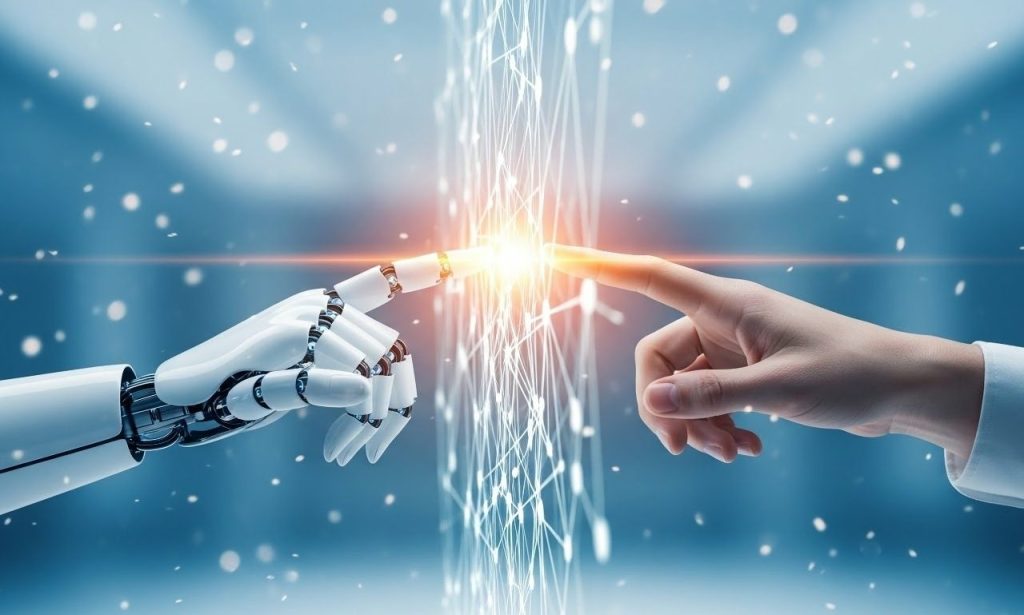
The future of virtual reality may depend as much on touch as it does on graphics.
Researchers are developing lighter wearables, smarter feedback systems, and entirely new methods of delivering sensation. Artificial intelligence is expected to play a growing role by adapting haptic responses in real time.
Advances in materials science may produce flexible devices that feel almost invisible when worn. Some experimental systems already resemble fabric more than traditional electronics.
Longer term, scientists are exploring direct communication with the nervous system. Although still in its early stages, this research hints at possibilities that once belonged entirely to science fiction.
Virtual reality has already transformed what people can see and hear inside digital environments. The next major breakthrough may come from what they can feel.
Conclusion
Understanding how virtual reality haptics work means understanding a fundamental challenge of immersive technology. Humans rely on touch to interpret the world around them, and virtual environments become far more convincing when they engage that sense. Through a combination of sensors, software, and specialized hardware, haptic systems translate digital events into physical sensations that users can experience in real time. The technology still has limitations, but its progress has been remarkable. As virtual reality continues to evolve, haptics will play an increasingly important role in making digital experiences feel genuinely tangible.
Also Read: What Is Persistent Augmented Reality?
FAQs
Haptic gloves track finger movements and apply pressure or resistance to specific areas of the hand, creating the sensation of touching virtual objects.
Modern systems can simulate pressure, vibration, impact, and resistance, but they cannot yet recreate every aspect of real-world touch.
Force feedback uses mechanical resistance to simulate weight, tension, and physical constraints during virtual interactions.
Healthcare, manufacturing, engineering, military training, education, and gaming all use haptic technology to improve realism and interaction.
Leave a Reply